Precise and efficient real-time stocktaking of bulk goods
Volume measurement of bulk goods with the OWL EYE® system
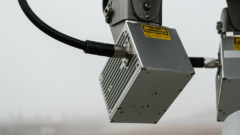
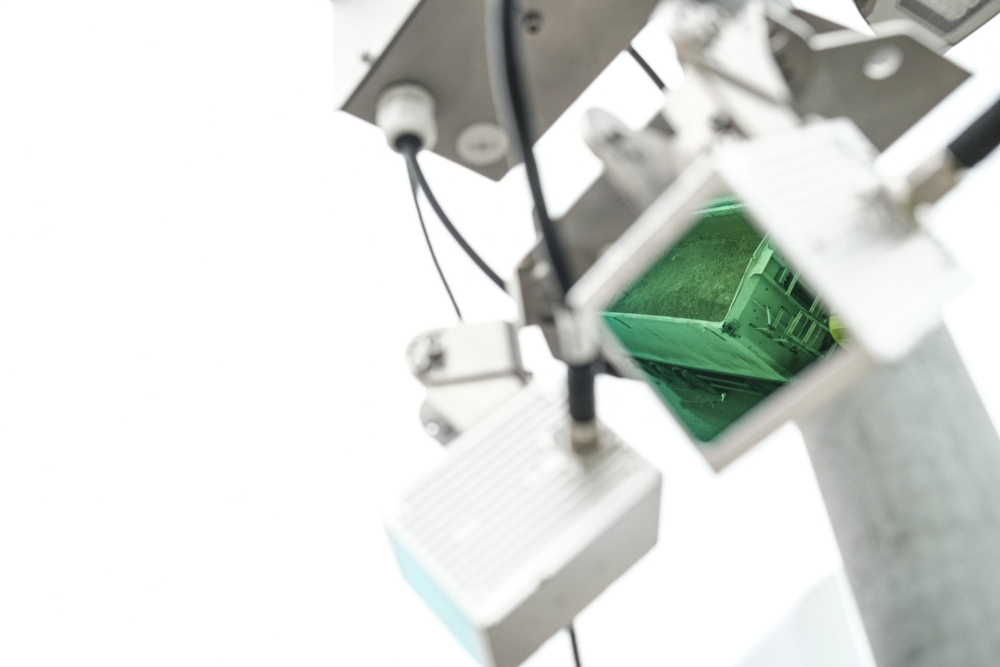
The OWL EYE® system uses innovative LiDAR (Light Detection and Ranging) sensors. These 3D laser sensors scan the surroundings and create a point cloud of the surrounding contours. This is a form of three-dimensional laser scanning. The volume can be converted into mass using the known density of the bulk material. Measurement, evaluation and visualisation are carried out via a web server application with a connected powerful database.
Bulk material stock inventory as a basis for expertise
Sachtleben Technology GmbH has a high-precision Riegl laser scanner with a range of up to 1.2 km. This is used to scan quarries, open-cast mines, bulk material dumps or buildings in three dimensions as a service. The scanner is set up at various locations and the individual point clouds are combined into one large point cloud. The data from the quarries and open-cast mines is then evaluated for slope monitoring by the mining authority.
For inventory purposes, such as year-end inventory, the volumes are calculated from the scanned bulk material piles. Special software from Maptek is used for this purpose. The evaluated volumes are then converted into mass using the known bulk density. For the year-end inventory, this value can then be used, for example, as the year-end stock.
Buildings are also scanned by Sachtleben Technology GmbH and processed to create a realistic digital twin as a CAD model. This knowledge has been incorporated into the algorithms of the OWL EYE® system, ensuring that automated data evaluation is reliable and accurate.
Efficient bulk material inventory stocktaking and logging
The OWL EYE® system developed by Sachtleben Technology is used for measuring and recording bulk material stockpiles. The stocktaking solution fits bulk materials of any kind. It is recorded using modern 3D LiDAR (laser) sensors. These scan the environment day and night and capture a 3D image. This is then automatically evaluated by the OWL EYE® software developed in Germany and visualised via an intuitive dashboard.
Finally, the stockpile volumes are evaluated. To do this, the volume between the recorded contour and the ground is calculated. The ground can be of any shape. Using the point cloud created, the measurement with OWL EYE® achieves a volume accuracy of 99% and minimal deviations of ±1% on average.
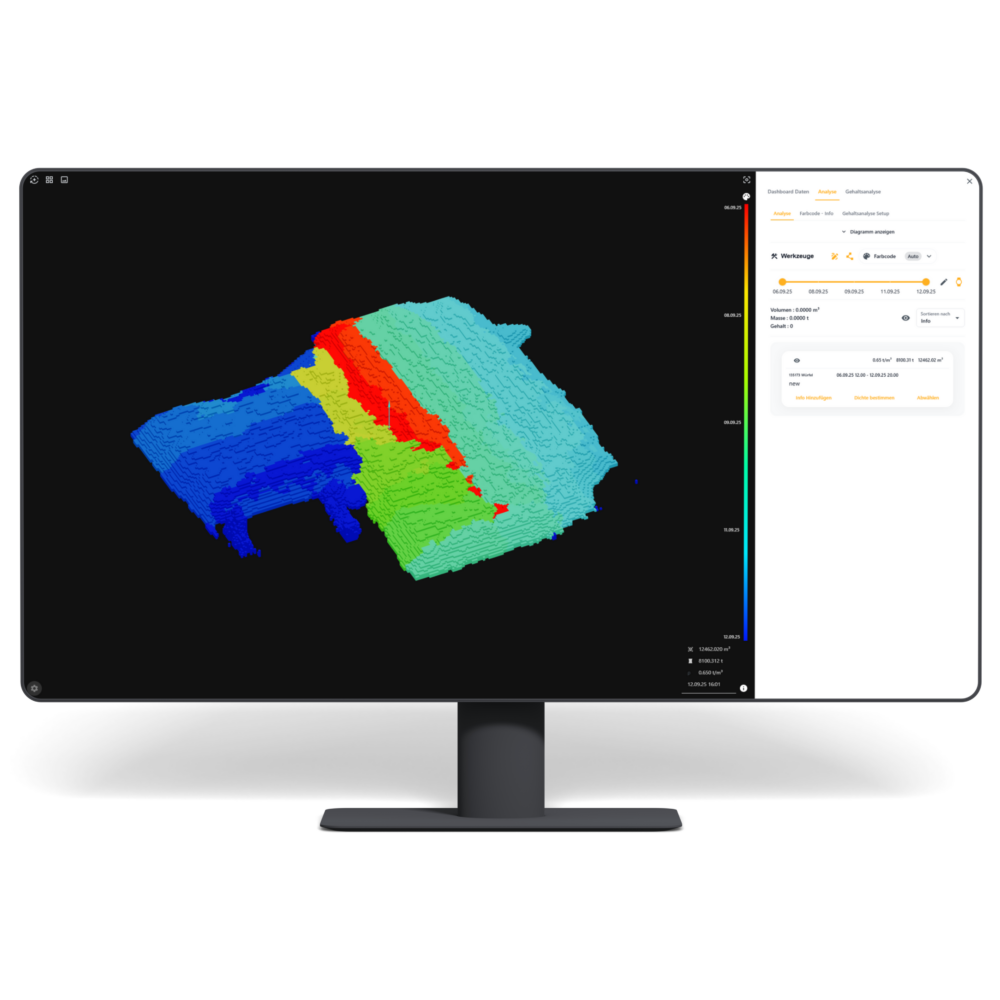
Another application of the OWL EYE® system is what is known as ‘stockpile history management’. This means that areas, e.g. a storage yard, can be scanned at any interval (e.g. hourly) and a log can be kept of which stockpile has been located where and for how long. This also works when one stockpile is tipped onto or against another stockpile.
Laboratory data on individual stockpiles or deliveries can also be entered as information, ensuring that an up-to-date picture of the stockpile inventory at the storage site is always recorded. Historical inventories are stored in a database and are thus archived. In the dashboard, it is then possible to filter by time periods or information and, for example, display only certain stocks in a time period or with linked information. This makes it possible to determine how long a particular stockpile has been at the storage location. A daily PDF log can then be created from this information.
Bulk goods inventory recording at the touch of a button
In times of raw material shortages, purchasers are often faced with the challenge of ordering raw materials. The problems often consist of material shortages and delivery bottlenecks. It is often the case that an unplanned order of raw materials can have a significant impact on production and sales. This makes it all the more important to know how much raw material is still available in the flat storage facilities. This is particularly important when dealing with high-priced materials or when delivery times are very difficult to predict. To counteract this problem, the OWL EYE® system from Sachtleben Technology GmbH can be used to precisely record and evaluate bulk material stocks in flat storage facilities.
However, the system can be used not only for inventory purposes, but also for optimising and controlling processes. For this purpose, the scanning frequency can be increased as desired and, for example, a measurement can be taken every two minutes. In addition, a 3D image is stored for each measurement so that the measured values and the inventory can be optimally traced afterwards. Open interfaces enable access to the data within the database via third-party systems such as an ERP system.